Date locally. Meet safely.

Straightforward advice for protecting your privacy, spotting scams and planning safer dates across Brisbane and South East Queensland.

A weeknight drink in South Bank sounds simple until the practical questions arrive. Who knows where you are? Can you get home without relying on your date? Have you shared too much in your profile? And is the person who has been messaging you actually the person in their photos?

Those questions are not cynical. They are sensible. Most dates are ordinary meetings between two genuine people, but trust should grow through consistent behaviour rather than being handed over because a profile looks convincing.

This guide brings the main dating safety tips into one place for Brisbane singles and people dating across Ipswich, Logan, Moreton Bay, Redlands, the Gold Coast, the Sunshine Coast and the wider South East Queensland region. It covers online checks, privacy, scams, first meetings, transport, consent and what to do when something feels wrong.

What does safe dating in Brisbane actually involve?

Safe dating means protecting your identity, money, physical safety and freedom to leave while you learn whether another person is trustworthy.

There is no single trick that makes dating risk-free. Safety works more like several light layers of clothing: each one seems modest, but together they provide useful protection. A limited profile, an in-app conversation, a quick video call, a public meeting place and an independent trip home all reduce different risks.

Local knowledge matters too. Dating in Brisbane can involve river crossings, last-service times, patchy mobile reception beyond the suburbs and long drives between places that look close on a map. A person in Cleveland and someone in The Gap may both be described as Brisbane-based, yet a casual coffee can become a considerable trip. Ask which suburb or general area someone lives in before making plans, without requesting their street address.

Trust the pattern, not the pitch. Genuine trust is built when someone’s words, identity and behaviour continue to line up over time.

Which safety habits matter at every stage?

The strongest habits are keeping control of your information, your money, your transport and the pace of the relationship.

  • Keep early contact contained. Use the dating service’s messaging tools until you are comfortable sharing a phone number or another account.
  • Protect financial information. Never send money, cryptocurrency, gift cards, banking details or identity documents to someone you know only through dating.
  • Verify without interrogating. A short live video call can confirm that the person broadly resembles their photographs and can hold a normal conversation.
  • Plan your own exit. Reach the first few dates independently and keep enough battery, money and account access to get home.
  • Tell somebody. Give a trusted person the name or profile details of your date, the venue and the time you expect to check in.
  • Respect discomfort. You do not need evidence fit for a courtroom to stop replying, block somebody or leave a venue.

Before you meet: profiles, privacy and scams

The first safety decisions happen before anyone books a table. A dating profile can reveal far more than its author intends, especially when the same photograph or username appears on work, social and community accounts.

How much personal information should you put on a dating profile?

Share enough to start a useful conversation, but leave out details that identify your home, workplace, daily routine or family members.

Your suburb may be useful because Brisbane is geographically spread out. Your street is not. Saying you work in healthcare, education or construction gives context; naming a small workplace can make you easy to locate. The same principle applies to photographs. A picture outside your house may show a number plate, street sign, school logo or recognisable apartment entrance.

Review the background, not just your face. Crop employee passes, mail labels, vehicle registration plates and children’s school uniforms. If you are unsure what your profile reveals, search your first name, occupation and suburb together. Then run a reverse-image search on one of your profile photos. This shows how easily a stranger could connect the profile with another public account.

For help presenting yourself clearly without publishing your life story, read the guide to creating a standout Brisbane dating profile.

Practical privacy tip: Use a dating-only email address and a unique password. Turn on multi-factor authentication where it is offered, and hide message previews on your locked screen if you share a home or regularly leave your phone visible at work.

Should you move from the dating site to text or social media?

Stay on the dating service until the person has behaved consistently and you are comfortable giving them another route to contact you.

A request to leave a platform is not automatically suspicious. Messaging apps can be easier. The catch is that moving too quickly may reveal your surname, phone number, social network, workplace or family connections, while also taking the conversation beyond the site’s reporting tools.

Check the privacy settings of any app before sharing it. Some services display a full name or phone number by default. A secondary number can create distance, but it is not a substitute for good judgement. Screenshots and copied messages can exist after an account is deleted.

What are the warning signs of online dating scams in Brisbane?

The clearest scam signs are rapid emotional pressure, inconsistent identity details and any request involving money, accounts, investments or confidential codes.

Online dating scams in Brisbane usually do not depend on a sophisticated technical attack. They depend on attention. The scammer creates urgency, affection or sympathy, then makes a financial request feel like the natural next step. They may claim to be working interstate or overseas, serving in the military, managing an offshore project or facing a sudden medical or travel problem.

The photos may be stolen from a real person. The voice may be real too. Live calls are useful, but no single check proves honesty about a name, job or intention.

  • Fast intensity. They speak about love, commitment or a shared future before you have met, often while discouraging questions.
  • Repeated reasons not to meet. Plans fail because of emergencies, remote work, travel or equipment problems, yet messaging continues intensely.
  • Money enters the conversation. They need a loan, airfare, customs charge, medical payment, phone credit or help accessing funds.
  • An investment opportunity appears. They steer you towards cryptocurrency, foreign exchange, a private trading site or a supposed financial adviser.
  • Identity details drift. Their age, location, family history or work schedule changes when you ask ordinary follow-up questions.
  • They seek access. They request verification codes, banking screenshots, remote access to your device or use of your account to receive money.

Never transfer money or assets to an online romantic contact. Do not accept money on their behalf either. Receiving and forwarding funds can involve you in money laundering, even if you believed you were helping somebody you cared about.

How can you check whether an online date is genuine?

Use several modest checks rather than treating one photograph, document or video call as conclusive proof.

  1. Read the profile closely. Look for internal consistency in the age, suburb, work, interests and timeline rather than judging spelling or polish alone.
  2. Keep a normal conversation going. Ask open questions about ordinary local life, then notice whether answers remain consistent without turning the exchange into an interview.
  3. Check the images. A reverse-image search may show that photographs belong to somebody else or appear under several names.
  4. Suggest a short video call. Keep it casual and do not show your home exterior, documents or anything else that exposes private information.
  5. Arrange a public meeting. A genuine person who is ready to date should usually be able to discuss a reasonable local meeting without financial help or endless emergencies.
  6. Report serious concerns. Save the profile name and relevant messages before blocking, then report the account to the service and contact Scamwatch or police where appropriate.

Some genuine people are camera-shy, work unusual hours or protect their own privacy. One declined video call is not proof of a scam. Look at the whole pattern. Pressure, contradictions and money requests carry far more weight than an awkward conversation.
Person reviewing privacy settings on a dating profile

Planning a safer first date

Meeting in person changes the risk, but it also makes sensible planning easier. You can choose a busy place, set a short timeframe and leave under your own steam. There is no requirement to make a first date elaborate.

Where should you meet for a first date in Brisbane?

Choose a familiar, staffed public place with reliable phone reception, visible exits and straightforward transport home.

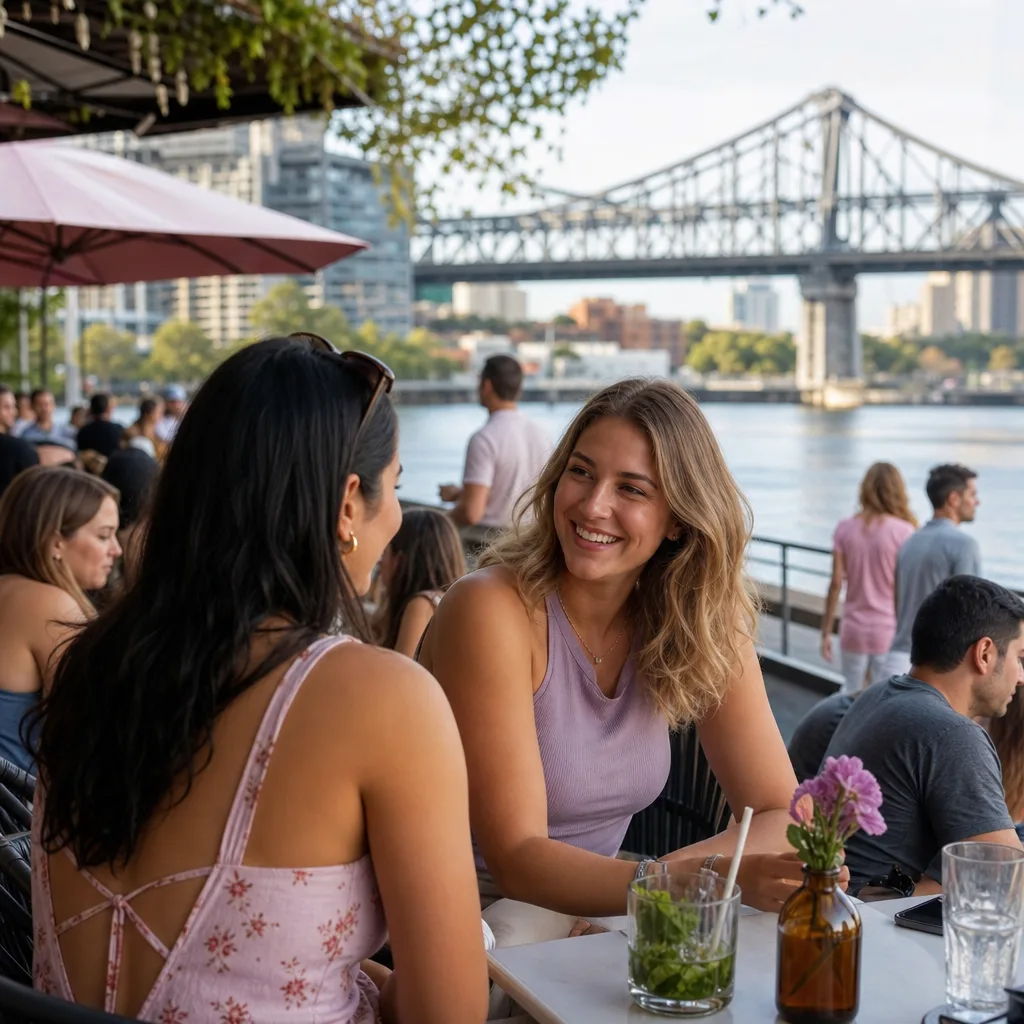
A daytime coffee near Brisbane Square, a visit to Queensland Art Gallery or the Gallery of Modern Art at South Bank, or a drink in a busy precinct can all work because other people are nearby and the meeting can be kept brief. South Bank Parklands is well known and well connected, but a public park is not equally busy in every section or at every hour. Stay around lit, active areas rather than moving to an isolated riverside path late at night.

Brisbane’s river makes transport part of the decision. A venue that looks central may be inconvenient once a missed ferry, bridge crossing or late finish is factored in. Brisbane singles living in Bulimba, New Farm, West End or further out should check the actual homeward journey, not just the distance as the crow flies.

First-date optionUseful featuresPoints to check
Busy caféStaff present, easy to keep brief, usually suitable in daylightClosing time and nearby transport
Gallery or museumPublic setting, built-in conversation, staff and visitors nearbyOpening hours and any ticket requirements
Popular restaurant or barStaffed venue and a clear booking locationAlcohol limits, noise and the trip home
Public market or daytime eventPlenty happening without a long formal commitmentCrowds, weather and a precise meeting point
Park or waterfront walkLow cost and relaxed in busy daylight areasLighting, isolation, weather and mobile reception

A private home, hotel room, remote lookout or long bushwalk gives you fewer easy exits. Save those plans until trust has developed. The same goes for accepting a lift. It may feel convenient, particularly where public transport is limited, but it gives a new acquaintance your address and control over your route.

What should you tell a friend before a first date?

Tell a trusted person who you are meeting, where you will be, how you are travelling and when they should expect to hear from you.

Send the person’s profile link or screenshots, the displayed name, the venue and the planned start time. Agree on a simple check-in. It might be a text after 45 minutes and another when you are safely home. If your plans change, say so. A safety plan cannot work if your contact believes you are at South Bank while you have travelled to a house in another suburb.

Some phones and messaging apps allow temporary location sharing. That can help, but technology fails. Batteries run down. Reception disappears. A plain message with the venue and time remains useful.

If privacy is sensitive because of family, colleagues or an ex-partner, choose one discreet person who will take the arrangement seriously. You do not owe the wider world an announcement that you are dating.

How do you plan safe transport for a Brisbane date?

Plan both the outward and return journey before leaving, including a backup that does not depend on your date.

Check Translink journey information and last services on the day, especially at night, on weekends or during track works and major events. A CityCat trip can be an easy way to cross parts of the river, but ferry terminals are not equally busy after dark. Know the walking route from the stop to the venue and from the venue back to the stop.

If you drive, park in a lit, established area and avoid letting your date walk you directly to your car if you feel uneasy. If you use a rideshare or taxi, confirm the vehicle and driver details shown in the app before getting in. Do not get into a different vehicle because somebody claims the booking changed.

Travel becomes more significant for single people in South East Queensland outside the inner city. A date between Brisbane and the Gold Coast, Sunshine Coast or Lockyer Valley may involve motorway driving, limited late public transport and a much longer exit if the meeting goes badly. Early on, meet halfway in a populated centre rather than staying overnight simply because the drive is inconvenient.

How can you stay safer around alcohol and food?

Keep your drink under your control, know your own limit and leave if you become unexpectedly unwell or confused.

You can choose not to drink, and you do not need to defend that choice. If you do drink, order directly from staff where possible and avoid leaving the drink unattended. Do not accept an open drink that you did not see prepared. Sudden dizziness, confusion, nausea, loss of coordination or memory gaps can have several causes, including alcohol, medication or drink spiking, and all deserve prompt attention.

Tell venue staff or a trusted person immediately if you feel unusually unwell. Move towards other people, not to a car or private place with the person causing concern. Call 000 if there is an immediate threat or medical emergency. If possible, preserve the drink and seek medical care promptly, but do not delay urgent help in an attempt to collect evidence.

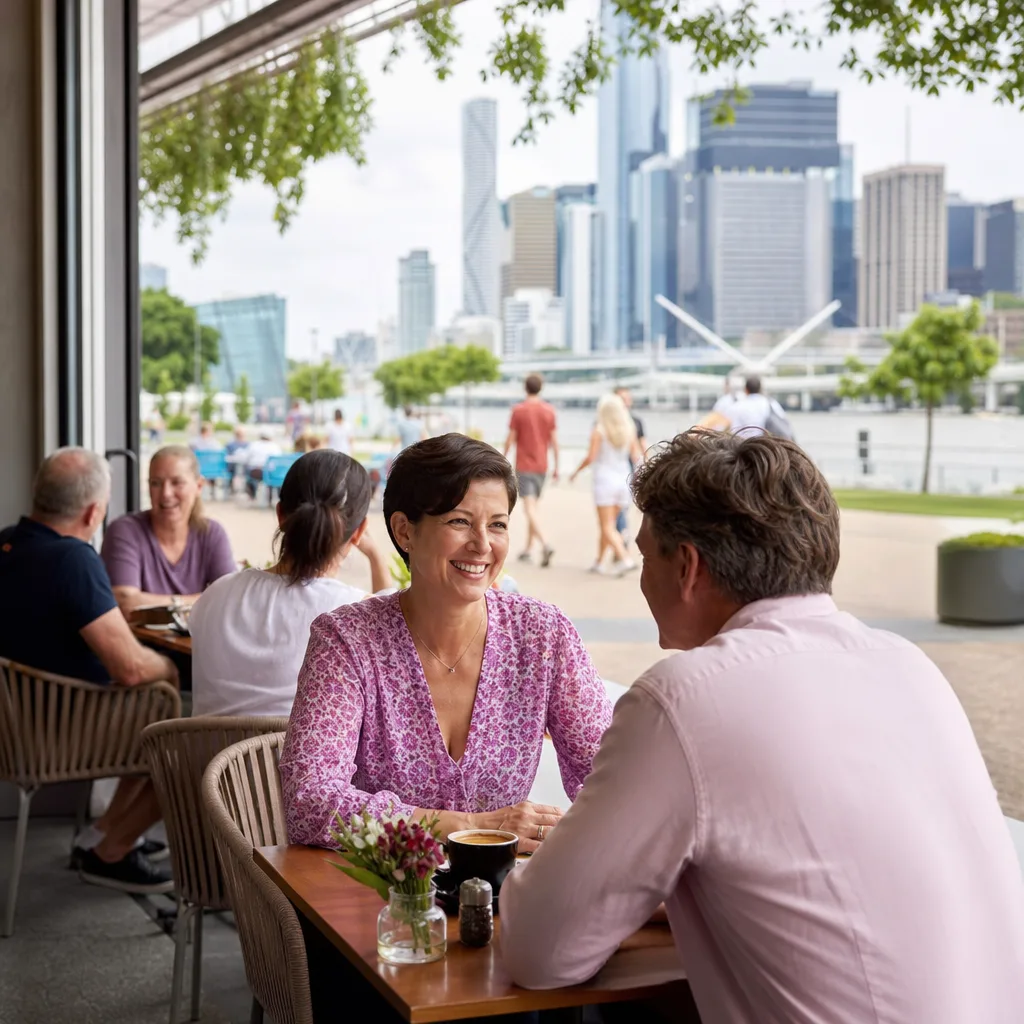
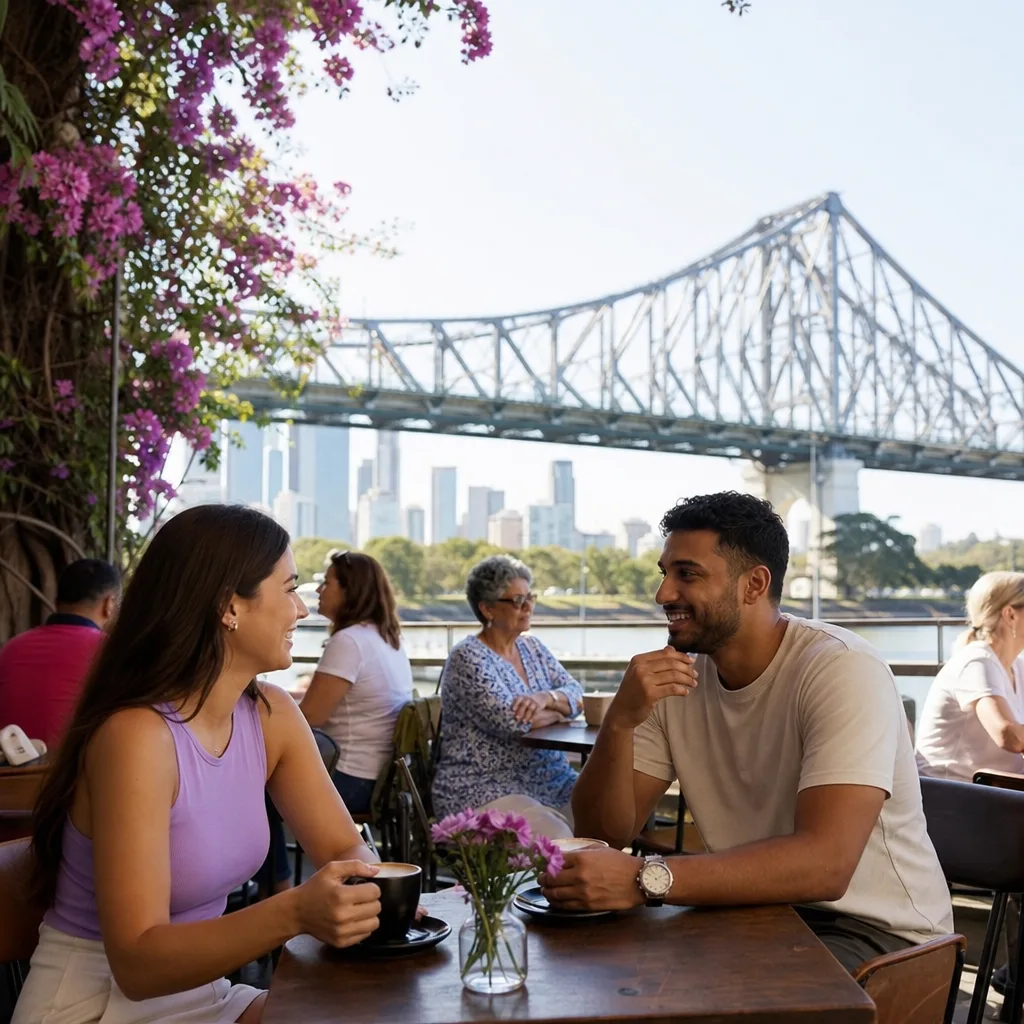
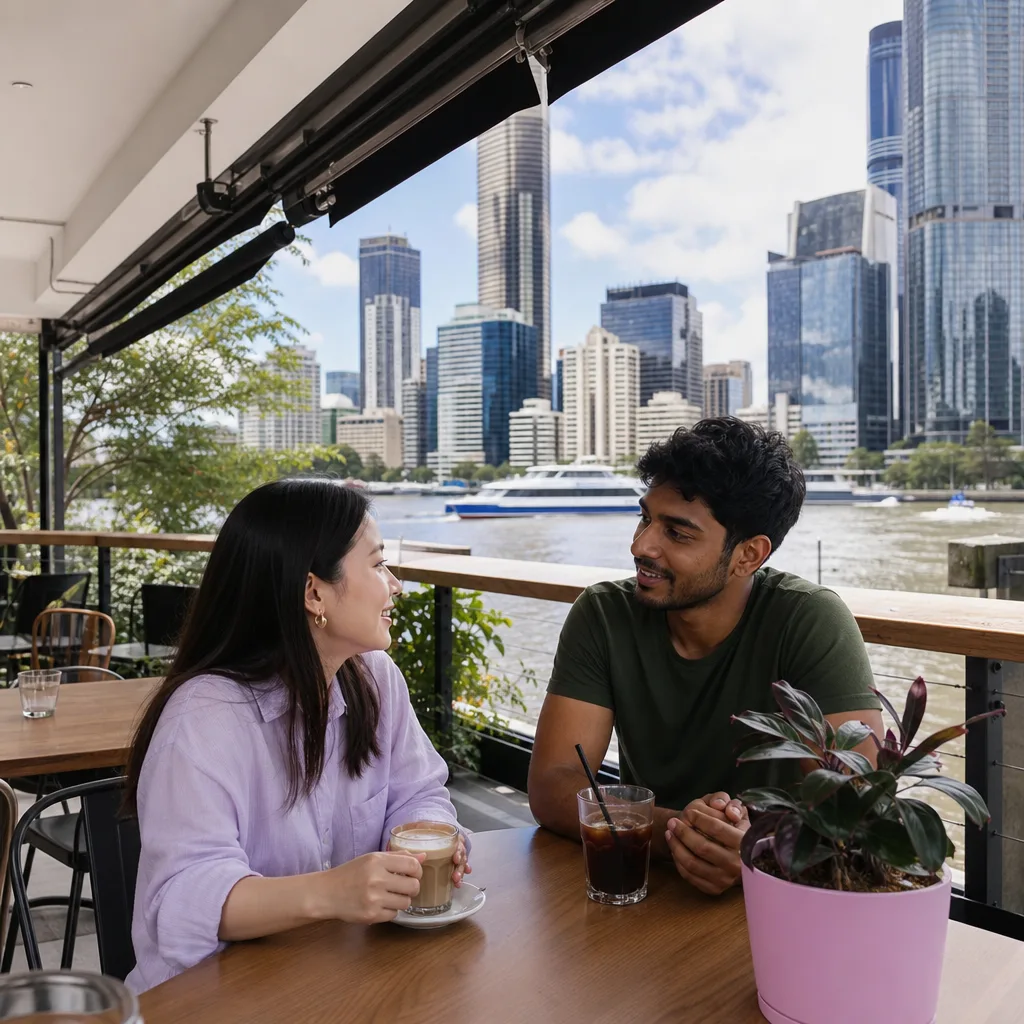
Busy public café near the Brisbane River prepared for a daytime meeting

Boundaries, consent and getting help

A public venue and charged phone do not settle every question. Safety also depends on whether both people can state limits, change their minds and leave without pressure. Courtesy is useful. Compliance is not required.

Consent is a freely given, informed and ongoing agreement that can be changed or withdrawn at any time.

Agreeing to coffee does not mean agreeing to dinner, a lift, another venue, physical contact or sex. Paying for a meal buys the meal. Nothing else. Consent should be clear rather than inferred from flirting, earlier intimacy or the fact that somebody invited you home.

Alcohol and other drugs can affect a person’s ability to consent. If somebody is asleep, unconscious or too affected to make a free and informed choice, stop. When unsure, ask plainly. A respectful person will not punish hesitation, bargain after a no or claim that money and time create an obligation.

Boundaries can be practical as well as physical. You may not want to disclose your surname, introduce children, discuss a former relationship or have photographs posted online. A reasonable boundary does not need an impressive explanation.

What should you do if a date makes you uncomfortable?

Move towards safety, end the interaction clearly if you can, and seek help without waiting for the situation to become obviously dangerous.

Sometimes discomfort arrives as a small mismatch. The person ignores a minor request, insults staff, pushes for more alcohol or keeps trying to change the venue. None of those acts alone predicts what will happen next. Together, however, they can tell you that leaving is the sensible option.

  • Use direct words if safe. “I’m leaving now” is enough; you do not need to negotiate or provide a detailed excuse.
  • Approach venue staff. Ask them to call a taxi, let you wait in a staffed area or contact security or police.
  • Contact your check-in person. Use an agreed phrase if you need them to call you, collect you or contact emergency services.
  • Do not go somewhere quieter. Stay around staff, lighting and other members of the public while arranging your exit.
  • Call 000 in an emergency. If you are in immediate danger, being followed, injured or unable to leave safely, contact police or ambulance.

Afterwards, write down what happened while it is fresh. Keep messages, receipts, rideshare records and profile details. Block the person if needed and report their account through the Brisbane dating site. Reporting can help a service review conduct, although platform action is separate from a police report.

How can LGBTQIA+ people manage disclosure and privacy?

Share identity information at your own pace, check who can see your profile and choose meeting places where you feel socially as well as physically safe.

For some people, being recognised on a dating service could affect family relationships, work or housing. Review visibility controls and avoid linking accounts that expose a legal name or contact list. Be cautious if somebody threatens to disclose your sexuality, gender history, private photographs or messages. That is coercion, not a dating disagreement.

Trans and gender-diverse people are entitled to set their own boundaries around personal history, bodies and medical information. Nobody is entitled to invasive details. If a meeting feels hostile after disclosure, prioritise leaving rather than trying to persuade the other person to behave reasonably.

How should parents and carers approach dating privacy?

Keep children and dependent family members separate from early dating until identity, behaviour and intentions have been tested over time.

A profile does not need to name children, show their faces, identify their school or reveal a regular care schedule. Early dates should happen away from the home. Introducing somebody gradually is not secrecy; it is sensible separation between an adult relationship and a child’s security.

Adults dating again after a long relationship may also need to review shared device accounts, cloud photo libraries, location sharing and old passwords. The concern is not technical confidence. It is access. An ex-partner who once knew a passcode may still be able to see calendars, messages or location data unless those settings have been changed.

Person sending a safety check-in message before an evening date

Good safety practice should support dating, not make every conversation feel like a threat assessment. Most of it is quiet and ordinary: reveal information slowly, notice consistency, meet where other people are present and retain the ability to leave.

Where can you report a scam, threat or assault in Queensland?

Use emergency services for immediate danger, police and specialist services for harm or threats, and national reporting services for scams and online abuse.

Call 000 if somebody is in immediate danger or needs urgent police, fire or ambulance assistance. For non-urgent police matters in Queensland, Policelink can be contacted on 131 444. Australian Scamwatch accepts scam reports and publishes current guidance, while the eSafety Commissioner provides help with image-based abuse, adult cyber abuse and other online harms.

Queensland residents affected by domestic or family violence can contact DVConnect Womensline on 1800 811 811 or Mensline on 1800 600 636. The Queensland Sexual Assault Helpline is available on 1800 010 120. Lifeline can be reached on 13 11 14 for crisis support. Service hours and eligibility can change, so check the organisation’s official website when the matter is not urgent.

If money has been sent to a suspected scammer, contact the bank or payment provider immediately. Speed can matter. Change compromised passwords, tell the dating service, save evidence and submit a Scamwatch report. Do not pay a supposed recovery agent who promises to retrieve lost money for an upfront fee; recovery scams commonly target people who have already been defrauded.

How do you return to dating after a bad experience?

Restart only when you choose, with smaller steps, clearer limits and support from people or services you trust.

There is no correct waiting period. One person may prefer a short daytime coffee; another may stop using dating services for months. Both are reasonable. A bad experience can sharpen useful boundaries, but it can also make every uncertainty feel dangerous. If fear is affecting sleep, work or daily life, a GP, counsellor or specialist support service can help.

When you do return, make the first step small. Update account security. Review photographs. Exchange a few messages rather than conducting an all-night conversation. Meet locally for a set period. People exploring dating over 40 in Brisbane may be returning after years away, while younger adults may be dating in a new city with few established contacts. The practical safeguards are the same, even when the circumstances differ.

Safe dating Brisbane-wide is not about suspicion for its own sake. It is about keeping enough control to make clear decisions. Choose nearby people, realistic plans and public places. Let trust take its time.

Frequently asked questions

Is it safe to give an online date my phone number?

It can be, but you do not need to share it immediately. Stay on the dating service until the person has behaved consistently, and check whether your number can reveal your full name or linked social accounts. A dating-only email address or secondary number can add privacy.

What is the safest place for a first date in Brisbane?

Choose a busy, staffed public venue with good phone reception and an easy trip home. A daytime café, major gallery or active South Bank venue can work well. Avoid private homes, remote walks and places that leave you dependent on your date for transport.

What should I do if an online date asks for money?

Do not send money, cryptocurrency, gift cards, identity documents or banking codes. Stop the transaction, save the messages, report the profile and contact your bank immediately if anything has already been sent. You can also report the matter to Scamwatch and police.

Meet Brisbane singles without making it a cross-town mission

Create a free profile, keep conversations local and decide when you are ready to meet.

Create my free profile